Why 90% of Construction Daily Reports Are Legally Useless
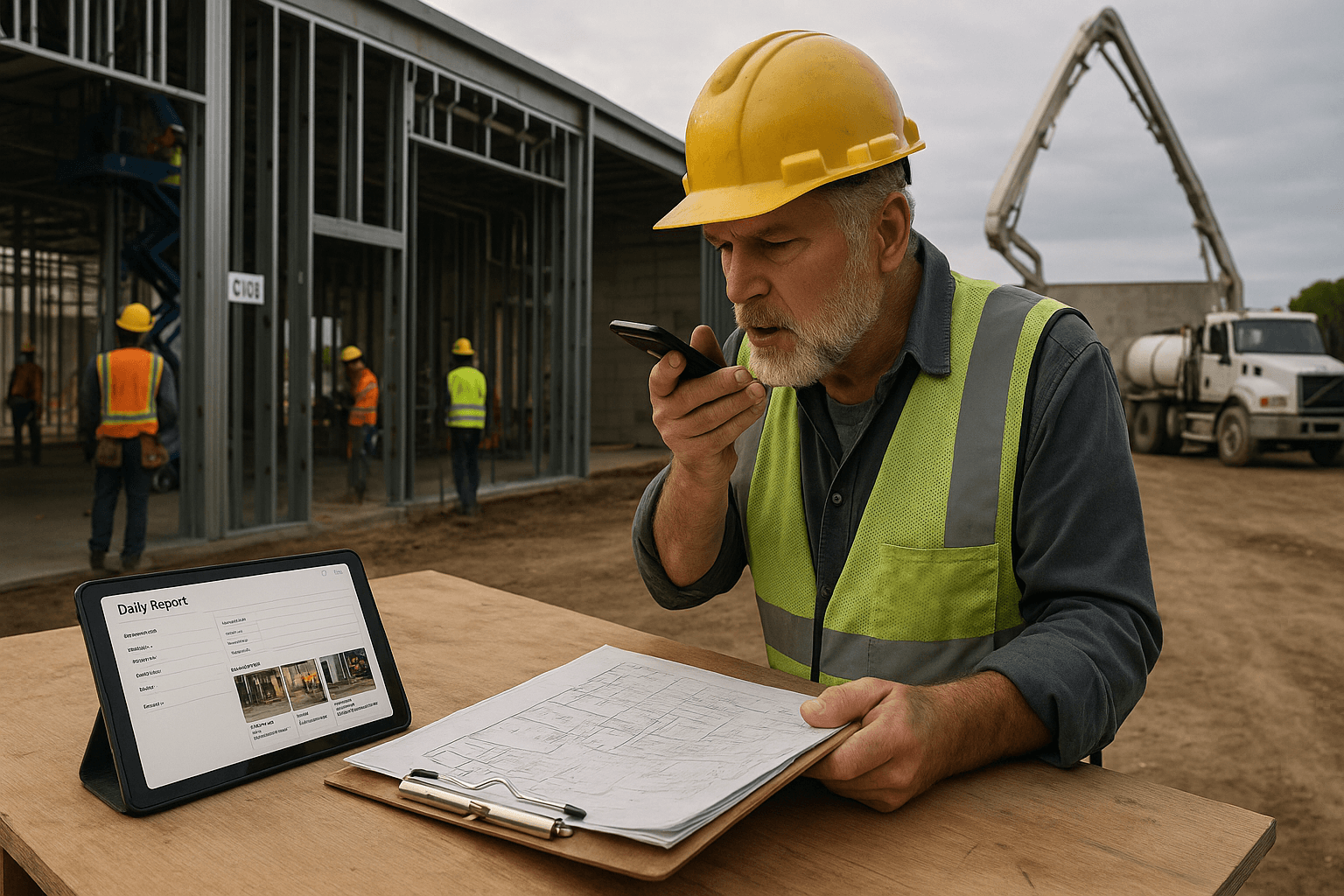
You think your daily report is “good enough” until the first time someone tries to use it in a fight. Then you find out the hard way that construction documentation legal isn’t about filling out a form—it’s about credibility, detail, and timing. The ugly truth: bad documentation is worse than none because it gives you false confidence… right up until it fails in a claim meeting, mediation, or court.
Table of Contents
- The $43 Million Problem
- What Lawyers Look For (And Don’t Find)
- The 5 Fatal Mistakes
- What a Legally-Defensible Report Looks Like
- Real Case Examples
- How to Fix Your Reports
- FAQ
The $43 Million Problem
Construction disputes aren’t “a couple change orders and a heated email.” They’re a slow, expensive grind that steals leadership time and cash flow.
According to the Arcadis Global Construction Disputes Report, the average construction dispute value in North America is about $43 million, and the average duration is about 14 months (values vary by year/region, but that’s the ballpark). Source: Arcadis, Global Construction Disputes Report (North America averages). https://www.arcadis.com/en/insights
Now put that number next to your daily report routine.
If your report says “framing continued” and you think you’re protected, you’re not. If your report is copied/pasted for three weeks straight and you think it’s “consistent,” it’s not. In a serious construction dispute documentation scenario, that kind of report doesn’t help—you might as well be saying, “We weren’t paying attention.”
Two real-world situations where the $43M problem shows up fast:
- Schedule impact claim: Owner says, “You delayed the job.” You say, “No, the late steel delayed the job.” Your daily reports need to show when steel was supposed to arrive, when it actually arrived, what work was blocked, and how many people stood by.
- Defect/backcharge fight: GC says, “Your crew caused the damage.” You say, “We weren’t even in that area.” Your report needs trade-by-trade manpower, locations, and photos that match the date.
Here’s the wake-up call: most daily reports aren’t “bad.” They’re legally useless—and the team doesn’t realize it until it matters.
What Lawyers Look For (And Don’t Find)
We’re not lawyers, and this isn’t legal advice. But anyone who’s sat through a claim meeting or been pulled into a construction daily report court situation learns the pattern quickly: the side with the cleanest, most credible story usually has the better documentation.
In a dispute, daily reports aren’t just “notes.” They’re often treated like contemporaneous business records—meaning they’re more believable when they were created the same day, by someone responsible, in the normal course of work.
What gets attention in construction lawsuit documentation:
- Specificity: quantities, locations, times, crew sizes, equipment, and what happened (not just what was planned)
- Consistency: the report matches the schedule, RFIs, inspections, photos, and meeting minutes
- Neutral tone: facts first, no editorial rants
- Traceability: who wrote it, when it was submitted, and whether it was edited later
What they don’t find (and why it hurts):
- Proof of impact: “delayed” without showing what was delayed, for how long, and why
- Proof of access: no notes on when areas were available/unavailable
- Proof of manpower and productivity: “crew on site” without counts, hours, or scope
- Proof of conditions: weather noted once, but no details when it actually mattered
Two examples of “sounds fine in the field, fails in a dispute”:
- “Plumbing rough-in ongoing.” (Okay… where? Which units? How many bathrooms? What inspections passed/failed?)
- “Concrete delayed due to weather.” (What weather? What time did you stop? Was it rain, wind, heat? Did you cover, pump, tent, or reschedule trucks?)
This is why daily report legal protection isn’t about writing more. It’s about writing the parts that stand up when someone challenges you.
The 5 Fatal Mistakes
Most superintendents aren’t lazy. They’re overloaded.
You’re juggling subs, safety, inspections, owner walk-throughs, deliveries, and constant changes. So the daily report becomes the last thing you do—if you do it.
But certain “normal” habits are exactly what makes a report fall apart under scrutiny.
1. “Worked on X today” (Too Vague)
Vagueness isn’t neutral. In disputes, vague reads like: “We can’t prove it.”
Bad entry (common):
- “Worked on drywall today.”
Why it’s weak:
- No location (Level 2? Area B? Units 210–225?)
- No quantity (sheets hung? partitions completed?)
- No manpower/hours (how many workers and for how long?)
- No constraints (blocked by MEP? waiting on inspection?)
Good entry (defensible):
- “Drywall crew (6 workers, 7:00–3:30) hung approx. 120 sheets 5/8" Type X on Level 3, Corridor C1–C4. Stopped at 2:15 for above-ceiling inspection hold in C3 (Inspector requested access panel revision—see RFI-27 reference).”
Two scenarios where specificity saves you:
- Productivity claim: If a sub says, “We lost two days due to others,” you can show exactly when they worked, where they were blocked, and what they completed.
- Payment fight: If someone challenges percent complete, your quantities and locations make billing defensible.
Practical takeaway: Write like you’re answering: Who did what, where, how much, and what got in the way? If your entry can’t answer those five things, it’s probably too vague.
2. Weather as an afterthought
Weather is often treated like a checkbox: “Clear, 70°F.” That’s fine—until weather becomes the reason something didn’t happen.
When weather matters, you need timing and impact, not a generic label.
Bad entry:
- “Weather: rainy.”
Good entry:
- “Weather: rain began ~10:40 AM, heavy rain 11:15–12:30. Exterior lift operations stopped 11:05–1:00 due to wind gusts and slick deck; crew reassigned to interior punch in Areas 1A/1B. Lost approx. 2 hours exterior façade work.”
Two common weather disputes:
- Concrete placements: “We couldn’t pour” is different from “We canceled trucks at 6:10 AM due to forecast lightning; rescheduled to 7/12; pump standby 2 hours.”
- Roofing and waterproofing: If you can’t install membrane due to moisture, note moisture conditions, when you tested, and what you did (tarped, dried, moved to alternate work).
Practical takeaway: When weather affects work, record:
- Start/stop times
- What operations were impacted (crane, lift, pour, roofing)
- What you did instead (mitigation)
That’s what turns weather from a checkbox into usable documentation.
3. Completed days later
A daily report written three days later isn’t a daily report. It’s a memory.
And memories drift—especially on fast-moving jobs.
In a credibility fight, same-day completion is one of the biggest factors that makes a report believable. If you’re finishing the week on Friday night, your notes may be honest, but they’re easier to attack.
Bad pattern:
- Monday and Tuesday reports are blank.
- Wednesday report “covers” three days.
- Details are generic because you’re guessing.
Good pattern:
- Report is completed the same day, ideally right after the last major coordination point (end-of-shift, after OAC, after inspections).
Two real-world examples of why timing matters:
- Safety incident: If an incident happens and your report was written later, people will question whether details were “adjusted” to match the narrative.
- Delay events: If you document a blocked access issue the day it happens, it’s hard to deny. If you document it a week later, it’s easy to say you’re rewriting history.
Practical takeaway: Put the report on your schedule like a meeting.
- 6–8 minutes right after lunch for quick notes (manpower, deliveries, constraints)
- 6–8 minutes end-of-day to finish and submit
If you can’t type it, use voice notes. The key is same-day.
4. No photos or wrong photos
Photos are powerful—until they backfire.
If your photo doesn’t have a timestamp, location context, or a clear subject, it’s just a random construction picture. Worse, if the photo contradicts your written notes, you just handed the other side a weapon.
Bad photo habit:
- A wide shot of “the site” with no label
- A close-up that could be any floor of any building
- Photos uploaded days later with mixed dates
Good photo habit:
- 3–8 photos per day that match the story of the report
- Each photo tied to a specific scope, location, and issue
Bad vs good example:
- Bad: Photo of a muddy slab, caption: “rain delay.”
- Good: Photo of the same area with: “Area B slab at Grid 3–5 / D–F at 11:30 AM; standing water present; pump running; crew moved off slab; pour postponed.”
Two scenarios where photos make or break you:
- Concealed conditions: Before you close walls/ceilings, photos of MEP rough-in and inspection stickers can shut down later blame games.
- Damage claims: Photos taken at turnover of an area (before a new trade mobilizes) can show pre-existing damage or clean handoff.
Practical takeaway: Take photos like you’re proving a point to someone who wasn’t there.
- Include a landmark (gridline, room number, unit number, elevation marker)
- Add a short note: what, where, why it matters
5. Blank sections
Blank sections are silent admissions.
If your report has fields for manpower, delays, visitors, deliveries, equipment, safety, and inspections—and half of them are blank—someone can argue you didn’t track them.
Even worse: blanks look selective. In a dispute, the other side may say, “They only filled in what helped them.”
Bad example:
- Manpower: blank
- Delays: blank
- Deliveries: blank
- Notes: “Good progress today.”
Good example:
- Manpower: “Drywall 6, Electrical 4, HVAC 3, Demo 2 (total 15)”
- Delays: “None noted today” (yes, actually write that)
- Deliveries: “(1) pallet Type X 5/8", (2) boxes 12/2 wire, (1) RTU curb”
Two times blank sections hurt:
- Backcharges: If equipment or visitors aren’t logged, it’s harder to dispute who was responsible.
- Access disputes: If “delays” is blank, you lose a consistent record of when access was blocked.
Practical takeaway: Replace blanks with short statements:
- “No deliveries today.”
- “No inspections scheduled.”
- “No delays observed.”
That single line can protect you later.
What a Legally-Defensible Report Looks Like
A legally-defensible report doesn’t mean “written like a lawyer.” It means it reads like a clean, factual record created the same day by someone paying attention.
If you want your construction documentation legal strategy to hold up under pressure, your report needs four things: facts, structure, timestamps, and supporting proof.
The “defensible” checklist (use this today)
- When: start/stop times for key events (shutdowns, inspections, deliveries, incidents)
- Where: areas, floors, gridlines, unit numbers, rooms
- Who: sub name, crew size, key visitors (owner, inspector, engineer)
- What: scope performed + measurable quantities
- So what: impacts/constraints + what you did about them
- Proof: photos that match the narrative
Bad vs good entries (copy these patterns)
1) Delivery delay
- Bad: “Material late.”
- Good: “Supplier delivery for door frames (PO 1842) scheduled 9:00 AM; arrived 1:20 PM. Install crew (3) redirected to hardware layout 9:30–12:00; lost approx. 2.5 hours planned install time in Level 2 South.”
2) Access conflict
- Bad: “Area not ready.”
- Good: “Unit 3B not released to paint due to electrical rough failed inspection at 10:15 AM (missing nail plates). Paint crew (2) moved to Units 3C–3D; noted standby 45 min waiting direction.”
3) Rework
- Bad: “Fixed issues.”
- Good: “Reworked 18 LF of 2" conduit in Corridor C due to clash with sprinkler main (coordination per updated sketch SK-12). Electricians (2) from 1:00–2:30.”
The goal isn’t to write a novel. The goal is to create a record that survives the three big attacks in any dispute:
- “You wrote it later.” (solve with same-day submission)
- “It’s too vague.” (solve with quantities/locations/times)
- “It doesn’t match reality.” (solve with photos + consistent structure)
Real Case Examples
These are simplified, field-realistic examples based on common dispute patterns (not legal advice, and not tied to a specific project name). They show exactly how “good enough” daily reporting collapses.
Example 1: The “We Were Delayed” argument that goes nowhere
Situation: A trade claims they lost 10 days due to access issues and stacking of trades.
What the superintendent had (weak):
- “MEP rough ongoing.”
- “Coordination issues.”
- “Working in rooms.”
Why it failed:
- No daily record of which rooms were unavailable
- No notes on who caused the blockage
- No start/stop times when work was halted
What would’ve helped:
- “Area 2A ceiling not accessible 7:00–11:30 due to duct install; drywall crew moved to Area 2B; 2 workers standby 30 min awaiting lift release.”
- Photos showing trade stacking in Area 2A at 9:15 AM with identifiable location
Immediate takeaway: If you’re dealing with stacking, write down:
- area, trade conflict, and how many people were affected
- what you reassigned them to (mitigation)
That’s what turns a complaint into construction dispute documentation.
Example 2: The “Your work caused the damage” blame game
Situation: A finished floor is scratched. Owner wants someone to pay.
What the daily report said (weak):
- “Floor protection installed.”
- No photos.
- No visitor log.
Why it failed:
- No record of when protection was installed
- No record of who worked in the area afterward
- No proof of condition at handoff
What would’ve helped:
- Photo: “Level 1 Lobby, 3:40 PM—floor protection (ram board + taped seams) installed, edges sealed at elevator threshold.”
- Entry: “Owner rep + elevator tech accessed lobby 4:10–4:55 PM; protection remained in place; noted no visible damage at 5:00 PM walkdown.”
Immediate takeaway: For high-value finishes, do a quick “handoff record”:
- condition photo
- who accessed the space afterward
That’s basic daily report legal protection.
Example 3: The report that hurts you more than having none
Here’s the unique angle most people miss: bad documentation can be worse than none.
Situation: The GC says they were shut down by the owner for two days. The superintendent’s reports are used to prove it.
The problem: The report says “No delays” on the exact day the shutdown supposedly happened.
Now your own daily report is the opposing side’s best exhibit.
Two ways “bad” becomes worse than none:
- Contradictions: Your report says “all good,” but emails/RFIs/photos show major issues. That makes your whole log look unreliable.
- False certainty: You fill in blanks with generic “no issues” language because it’s faster, but later it’s used to argue there were no issues.
Immediate takeaway: Don’t write what you wish happened. Write what happened, even if it’s messy. Facts beat optimism.
How to Fix Your Reports
You don’t need a law degree. You need a field-ready system that makes the right details easy to capture.
Below is a practical upgrade plan you can start tomorrow—no fearmongering, just steps.
Step 1: Switch to “field facts” language
Stop writing summaries. Start writing observations.
Use this pattern:
- Trade + crew size + hours
- Location
- Quantity installed/completed
- Constraints + impacts
- Mitigation
Two examples you can steal:
- “Electrical (4, 7:00–3:30) pulled wire in Level 2 west corridor; installed approx. 12 homeruns; stopped 1:10–1:50 waiting for ceiling access (HVAC working above).”
- “Masonry (5, 8:00–4:00) laid approx. 420 CMU at north stair core, Elev. 100–112; scaffold moved 2:30; no safety incidents.”
Step 2: Capture time the moment it matters
Claims live and die on timing.
Make it a habit to log time for:
- inspections (requested, arrived, passed/failed)
- deliveries (scheduled vs actual)
- shutdowns/standby (start/stop)
- access constraints (who blocked whom)
Two fast methods that work in the field:
- Phone lock-screen note: jot times as they happen (10 seconds)
- Voice note: “10:42 rain started, stopped lift at 11:05” (faster than typing)
This is where voice-first tools can help because you’re not trying to type perfect sentences with gloves on.
Step 3: Make photos part of the story (not an album)
Don’t take 30 random photos. Take 6 purposeful ones.
A simple daily photo set:
- 2 progress photos (wide + mid) with location
- 1 safety/housekeeping photo
- 1 inspection/quality photo (tags, test gauges, embed layout)
- 1 constraint photo (stacking, blocked access, missing material)
- 1 handoff/finish protection photo (when applicable)
Two examples of “context” that takes 5 seconds:
- “Level 4, Grid D-5—rebar mat complete, waiting on inspector.”
- “Unit 402 bath—waterproofing complete, flood test started 2:15 PM.”
Step 4: Kill the 3-day backlog forever
If your reports are late, fix the process before you fix the writing.
Try this routine:
- Midday micro-log (3 minutes): manpower, deliveries, visitors, issues
- End-of-day closeout (5 minutes): quantities, times, photos, submit
Two real scheduling hacks supers use:
- Do the micro-log right after your daily huddle, while you still remember who’s where.
- Close out right after the last inspection or owner walk—before the next fire starts.
Same-day completion doesn’t just help legally. It helps operationally because tomorrow’s plan is clearer.
Step 5: Standardize so every report is “court-ready by default”
You shouldn’t have to remember what to write when you’re exhausted.
Use a consistent structure every day:
- Work performed (by trade)
- Manpower (by trade)
- Deliveries
- Inspections/tests
- Delays/impacts
- Safety observations
- Photos with captions
Two examples of where standardization stops disputes early:
- If every report has “Delays/impacts,” you stop forgetting to document stacking.
- If every report has “Inspections/tests,” you stop losing track of pass/fail patterns that later become schedule arguments.
Where ProStroyka fits (practical, not magic)
If typing is the reason your documentation is thin, you’re not alone. Most supers can talk faster than they can type.
ProStroyka is built for that reality: true voice-first AI that turns a 2–3 minute voice recap into a structured PDF daily report—so you can get same-day completion without staying late. It also supports Spanish, offers offline mode for bad-signal jobs, and structures entries so you’re less likely to leave blanks.
Two ways teams use it in the real world:
- A superintendent records: “Drywall 6 guys, Level 3 corridor C1–C4, 120 sheets, stopped for inspection hold,” and the report comes out organized with headings and clean formatting.
- A foreman in Spanish records manpower, deliveries, and constraints onsite without fighting a tiny keyboard—then the report is ready before they drive home.
This isn’t about “avoiding all lawsuits.” It’s about not losing because your paperwork couldn’t carry the truth.
FAQ
Q: Are daily reports actually used in court? A: They can be. In many disputes, daily reports show up in discovery, claim narratives, mediation binders, and sometimes trial exhibits. Even when they don’t go all the way to court, they’re often used to pressure settlements. That’s why construction daily report court searches are so common—people realize late that their records matter.
Q: Is it better to have no daily report than a bad one? A: Sometimes, yes. A sloppy report can contradict emails, photos, schedules, or witness statements and damage credibility. That’s the “false confidence” problem: you think you’re protected, but your own report can be used against you. The better move is to fix the report so it’s factual, specific, and same-day.
Q: What details matter most for daily report legal protection? A: Timing (start/stop of impacts), location (areas/units/gridlines), manpower (by trade), quantities installed, and photos with context. If you only improve one thing, start adding where + how much + when.
Q: How many photos should a daily report include? A: Enough to support the story—often 3–8 purposeful photos beats 25 random ones. Prioritize progress, constraints, inspections/quality, and handoffs. Photos should have timestamps when possible and always include location context in the caption.
Q: If my project is going fine, why do daily reports matter? A: Because disputes often pop up months later—after turnover, after people change jobs, after memories fade. Daily reports are the long-term record that protects your schedule narrative, your payment narrative, and your quality narrative. That’s why daily reports matter even on “good” projects.
Don’t let your reports fail when you need them most. ProStroyka turns your voice notes into structured, professional PDF daily reports that hold up under real scrutiny. Start your free trial and get our complete guide to legally-defensible documentation—no credit card required.