How to Document Safety Incidents in Daily Reports
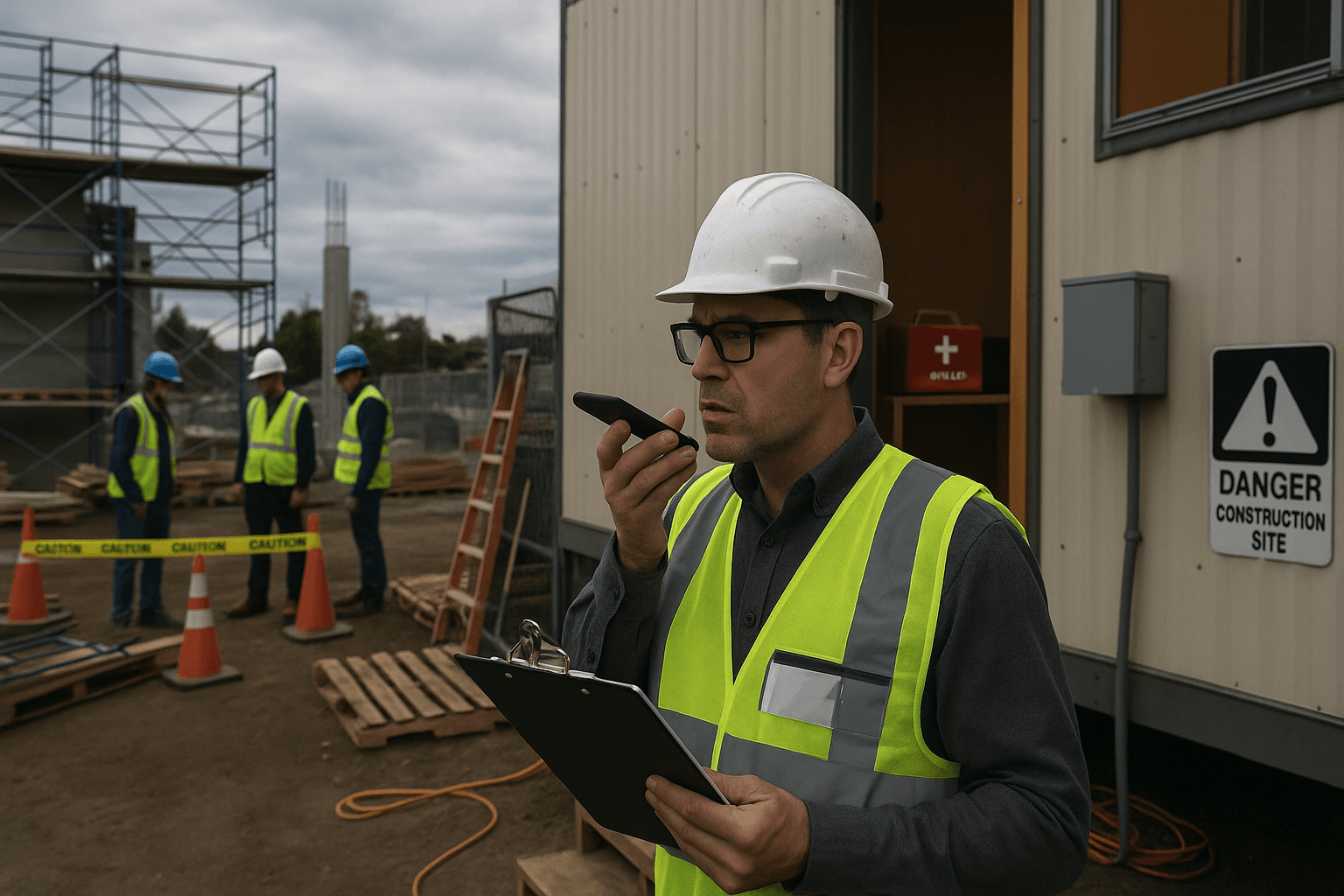
If you’ve ever tried to write safety incident documentation construction notes at 7:30 PM after a long day, you know the problem: details get fuzzy, people leave, and the “quick note” turns into a messy story that doesn’t help anyone. The goal of a daily report isn’t to solve the investigation or assign fault—it’s to capture clean, same-day facts so your safety team, PMs, and leadership can act fast and consistently.
Table of Contents
- Why Safety Documentation Can't Wait
- What Qualifies as an Incident
- What to Document
- Near-Misses: Document These Too
- The 'No Incidents' Entry
- OSHA Reporting Triggers
- Sample Incident Entry
- FAQ
Why Safety Documentation Can't Wait
Safety documentation daily report entries should be done the same day, every time—because the site changes fast and memory changes faster. The longer you wait, the more you end up with guesses: “around lunch,” “somewhere near the laydown,” “I think it was the electrician.” Those aren’t facts, and they don’t hold up when you need clarity.
Same-day documentation also prevents the “telephone game.” A foreman tells a super, the super tells a PM, the PM tells safety, and by tomorrow the story has grown legs. When you document right away, you’re locking in the basics before they drift.
Two real situations where same-day notes make a difference:
- Slip in a muddy access path: If you document that it rained, the path was muddy, and the crew added gravel at 2:15 PM, that’s actionable. If you wait two days, you’ll just have “someone slipped,” and the fix gets argued instead of implemented.
- Minor hand cut during material handling: When you note glove type, task, first aid applied, and that the worker returned to work, your safety manager can trend it (repetitive cuts = handling method issue) instead of treating it like a one-off.
Practical takeaways you can apply today:
- Set a rule: incident notes are entered before anyone leaves the site.
- Capture time, location, and immediate response first—those are the easiest to lose.
- Use factual language only. If you don’t know something, don’t guess.
What Qualifies as an Incident
A lot of jobsites only document the “big” events. That’s how you end up with daily reports that look clean until they suddenly don’t. For incident report construction purposes, think broader: if something affected safety, health, or had the potential to, it belongs in the record.
Common incident types that should show up in daily reporting:
- Injuries (first aid, medical treatment, restricted duty, lost time)
- Property damage (tools, equipment, building materials, completed work)
- Equipment incidents (tip-over risk, contact, mechanical failure that creates hazard)
- Environmental releases (fuel spill, hydraulic leak)
- Safety policy violations that created exposure (missing guardrail in an active work zone)
Two examples superintendents see all the time:
- Pinch-point near miss with a skid steer: No one got hurt, but the spotter had to yank a laborer back. That’s still an incident—document it as a near miss (more on that below).
- Dropped object with no injury: A wrench falls from a ladder and hits the slab. Nobody’s hurt, but it easily could’ve been. That’s a high-value data point for prevention.
A simple rule that helps: If it created an exposure or stopped work, document it. If you’re debating whether to write it down, write it down.
What to Document
Good construction accident documentation reads like a clear field log: who, what, when, where, and what you did immediately. It does not read like an argument, a conclusion, or a legal brief.
Below are the core elements that make your daily report useful without turning it into an investigation report.
Time and location
Time and location are the backbone. If those are vague, everything downstream becomes hard to verify.
Include:
- Date and exact time (or tight window if exact time isn’t available)
- Specific location (building, gridline, floor, room/area, station)
- Conditions that matter (weather, lighting, housekeeping, access)
Two examples:
- “01/23/2026, 10:40 AM — Level 2, north corridor, Grid B-6 to B-8. Floor damp due to morning rain tracked in.”
- “01/23/2026, 2:05 PM — Laydown yard, east gate entrance. High winds; temporary fencing moving.”
Practical takeaways:
- Use gridlines and floor numbers instead of “over by the stairs.”
- If conditions mattered (ice, rain, low light), note them in one sentence.
People involved
Daily reports should identify the people involved at a practical level—without commentary.
Include:
- Worker name (or employee ID per company policy)
- Employer/subcontractor
- Role/trade (laborer, carpenter, electrician)
- Supervisor/foreman notified
Two examples:
- “Involved: J. Smith (ABC Electrical, journeyman). Foreman notified: R. Alvarez.”
- “Involved: M. Chen (ProStroyka GC crew, laborer). Safety manager notified: K. Patel.”
Practical takeaways:
- Stick to identification and notification, not opinions.
- If you don’t know the name yet, document what you know: “Worker from XYZ Masonry (name to be confirmed).” Then update when confirmed per your process.
What happened (factual)
This is where documentation often goes wrong. The daily report should record observable facts—not who “should’ve” done what.
Use language like:
- “Worker stepped,” “material shifted,” “forks contacted,” “ladder moved,” “hand contacted sharp edge.”
Avoid:
- “Careless,” “not paying attention,” “should have known,” “operator was reckless.”
Two examples showing the difference:
- Better: “Worker was moving 2x4s from a bundle. While lifting, a board edge contacted left palm, causing a small laceration.”
- Not helpful: “Worker cut hand because he wasn’t careful and ignored PPE.”
Better: “During repositioning of a rolling scaffold, the front caster contacted an extension cord. Scaffold stopped abruptly; no fall occurred.” Not helpful: “Electrical left cords everywhere and almost caused an accident.”
Practical takeaways:
- Write what a camera would show.
- If something is unknown, say unknown: “Cause of shift unknown at time of entry.”
- Separate “what happened” from “next steps”: corrective actions go in the response section.
Immediate response
Document what you did right away to protect people and stabilize the area. This is where you show control of the site without pointing fingers.
Include:
- First aid provided and by whom (if applicable)
- Whether EMS was called (yes/no)
- Whether work stopped and area was secured
- Notifications made (super, safety, PM, foreman)
- Immediate corrective action (barricade, clean-up, equipment removed from service)
Two examples:
- “First aid: cleaned and bandaged on site by designated first aid attendant. Worker returned to task at 11:10 AM.”
- “Area secured with cones and caution tape. Housekeeping performed; wet floor signage placed. Work resumed at 3:05 PM.”
Practical takeaways:
- Always include whether the worker returned to work, was restricted, or left the site (just the status—no medical conclusions).
- If equipment is involved, note: “Equipment tagged out pending inspection.”
Witnesses
Witness statements belong in your formal process if your company requires them. In the daily report, you just need witness identification and whether they were interviewed or directed to safety.
Include:
- Names and companies of witnesses
- Where they were positioned (if relevant)
- Whether statements were requested
Two examples:
- “Witnesses: L. Gomez (XYZ Drywall) and T. Nguyen (ABC Electrical). Both advised to provide statements to safety.”
- “Witness: J. Patel (Crane operator, subcontractor). Observed event from south access road.”
Practical takeaways:
- Don’t write “witness confirms X was at fault.” Keep it to “witness observed X.”
- If no witnesses: write “No witnesses identified at time of entry.”
Near-Misses: Document These Too
Near miss documentation is one of the best leading indicators you can capture. If you only document injuries, you’re waiting for pain to teach you. Near misses teach you before someone gets hurt.
A near miss is an unplanned event that didn’t result in injury or damage—but easily could have.
Two common near misses worth documenting every time:
- Dropped object that misses a worker: “Tape measure fell from 8’ ladder; landed 2’ from worker’s position.” That’s a direct reason to review tool lanyards, toe boards, or housekeeping.
- Back-up alarm not functioning: No contact occurred, but the exposure was there. That’s a maintenance and pre-use inspection issue, not a “lucky day.”
Near-miss entry example (simple and factual):
- “01/23/2026, 9:15 AM — Level 3, Grid D-4. During rebar delivery, bundle shifted approximately 6 inches while being set down. No contact with personnel; no damage observed. Area cleared, bundle repositioned, and rigging method reviewed with crew. Notified: rebar foreman and site safety.”
Practical takeaways:
- Treat near misses like free lessons. Document them the same day while details are fresh.
- Include the preventive fix you applied immediately (re-barricaded, changed path, corrected rigging, added spotter).
The 'No Incidents' Entry
Leaving the safety section blank is not the same as recording “no incidents.” Blank reads like “missed,” “forgot,” or “we don’t track it.” A clear entry shows you intentionally checked.
Use a consistent line every day:
- “Safety incidents: None observed/reported today.”
- “Near misses: None reported today.”
Two scenarios where “None” matters:
- Multi-crew day with high activity: Concrete pour, overhead work, deliveries. If it’s blank, someone reviewing later will assume the report is incomplete.
- Days leading up to an audit or client review: A consistent “None” entry shows discipline in your process, even on quiet days.
Practical takeaways:
- Make “None” your default, then replace it with details when something happens.
- Add a quick proactive note when relevant: “Safety incidents: None. Conducted morning stretch/flex and ladder safety reminder.”
OSHA Reporting Triggers
You’re not looking for legal strategy in a daily report, but you do need awareness of OSHA timelines so the right people get notified fast.
At a high level (U.S. federal OSHA), employers must report to OSHA:
- Any work-related fatality within 8 hours
- Any work-related inpatient hospitalization, amputation, or loss of an eye within 24 hours
These are the commonly referenced OSHA reporting timelines (8-hour/24-hour). State plans can have additional requirements, and companies often have stricter internal rules.
Two real-world examples where timing matters:
- Worker sent to the hospital and admitted overnight: That’s different from being evaluated and released. The daily report should record facts like “transported to hospital” and “admitted” if confirmed.
- Finger tip amputation in a fabrication area: Even if the worker is stable, this is a reportable trigger. Your daily report should make it obvious that leadership and safety were notified immediately.
Practical takeaways:
- In the daily report, document who was notified and when (safety manager, PM, leadership).
- Don’t guess medical outcomes. Use factual status: “Transported for evaluation,” “treated and released,” or “admitted (per supervisor confirmation).”
- If you suspect a reporting trigger, escalate internally right away—your documentation should show that escalation happened promptly.
Sample Incident Entry
Below are two sample entries you can adapt. They’re written to stay factual, avoid blame, and include the details safety teams actually need.
Sample: Minor injury (first aid)
- Date/Time: 01/23/2026, 10:40 AM
- Location: Level 2, north corridor, Grid B-6 to B-8
- People involved: J. Smith (ABC Electrical, journeyman). Foreman notified: R. Alvarez.
- What happened (factual): Worker was carrying a bundle of 1/2” EMT conduit. While setting the bundle down, a conduit end contacted left palm, causing a small laceration.
- Immediate response: First aid provided on site (cleaned and bandaged). Worker returned to work at 11:10 AM. Area checked for sharp edges; conduit ends inspected before moving remaining material.
- Witnesses: L. Gomez (XYZ Drywall) observed from corridor entrance.
- Photos/attachments: Photos taken of conduit bundle and work area (stored per company process).
Sample: Near miss (no injury)
- Date/Time: 01/23/2026, 2:05 PM
- Location: Laydown yard, east gate entrance
- People involved: Forklift operator: M. Chen (GC crew). Spotter: A. Rivera (GC crew).
- What happened (factual): While backing forklift with pallet of block, the right rear tire crossed a soft spot and forklift leaned approximately 3–5 degrees. No tip-over occurred. No contact with personnel. Pallet remained on forks.
- Immediate response: Movement stopped. Area cordoned off. Pallet set down in stable location. Soft spot marked and filled with gravel. Operator and spotter reviewed travel path and spotter positioning before resuming.
- Witnesses: None identified at time of entry.
Practical takeaways:
- Use this structure every time so nothing gets missed under pressure.
- “What happened” should be 2–4 sentences. If it takes a page, it’s drifting into investigation territory.
FAQ
Q: How detailed should safety incident documentation construction notes be in a daily report? A: Detailed enough that someone who wasn’t there can understand the basics: time, location, people, what happened, and immediate response. Keep it factual and tight. Save root-cause conclusions and corrective action plans for your formal safety process.
Q: Should I name the person involved in construction injury documentation? A: Follow your company policy. Many companies record names internally for tracking and follow-up. In all cases, don’t add opinions about the worker—just identification and notification details.
Q: What if I don’t know the full story yet—should I wait? A: Don’t wait. Document what you know same-day and label unknowns as unknown. Example: “Cause unknown at time of entry; area secured; safety notified.” That’s better than a late report built from guesses.
Q: What’s the difference between leaving the safety section blank and writing “None”? A: Blank looks like missing documentation. Writing “Safety incidents: None” shows you checked and confirmed nothing was observed or reported. That consistency matters during reviews, audits, and trend tracking.
Q: Do I include OSHA reporting details in the daily report? A: Record the facts and notifications. It’s fine to reference that the safety team was notified promptly and that the incident may meet a reporting trigger. Avoid conclusions—focus on timelines, status, and who was contacted.
Good documentation protects your crew and your company. Never skip safety entries. ProStroyka turns voice notes into structured daily reports with consistent safety sections (including Spanish support and offline mode), so you can document incidents the same day without staying late. Start your free trial — no credit card required.